


Americans Expect Companies to Engage — They Just Don’t See It
May 2026
Business leaders have long weighed how—and when—to engage in public policy debates, mindful of the expectations of customers, employees, investors and other stakeholders. The 2026 Public Affairs Pulse Survey suggests that thoughtful engagement is not only acceptable but broadly expected. The greater challenge for many companies today is not backlash from speaking out, but limited public awareness that they are engaging at all.

Conducted by Morning Consult in late March 2026, the survey finds that Americans largely view corporate engagement on major policy changes as appropriate—and even healthy—for democracy. What’s often missing isn’t public approval; it’s visibility.
The 2026 findings build on a 15-year Pulse trend: Americans may not trust business unconditionally, but they increasingly look to business as an institution with influence, responsibility and a role to play when policy affects economic life.
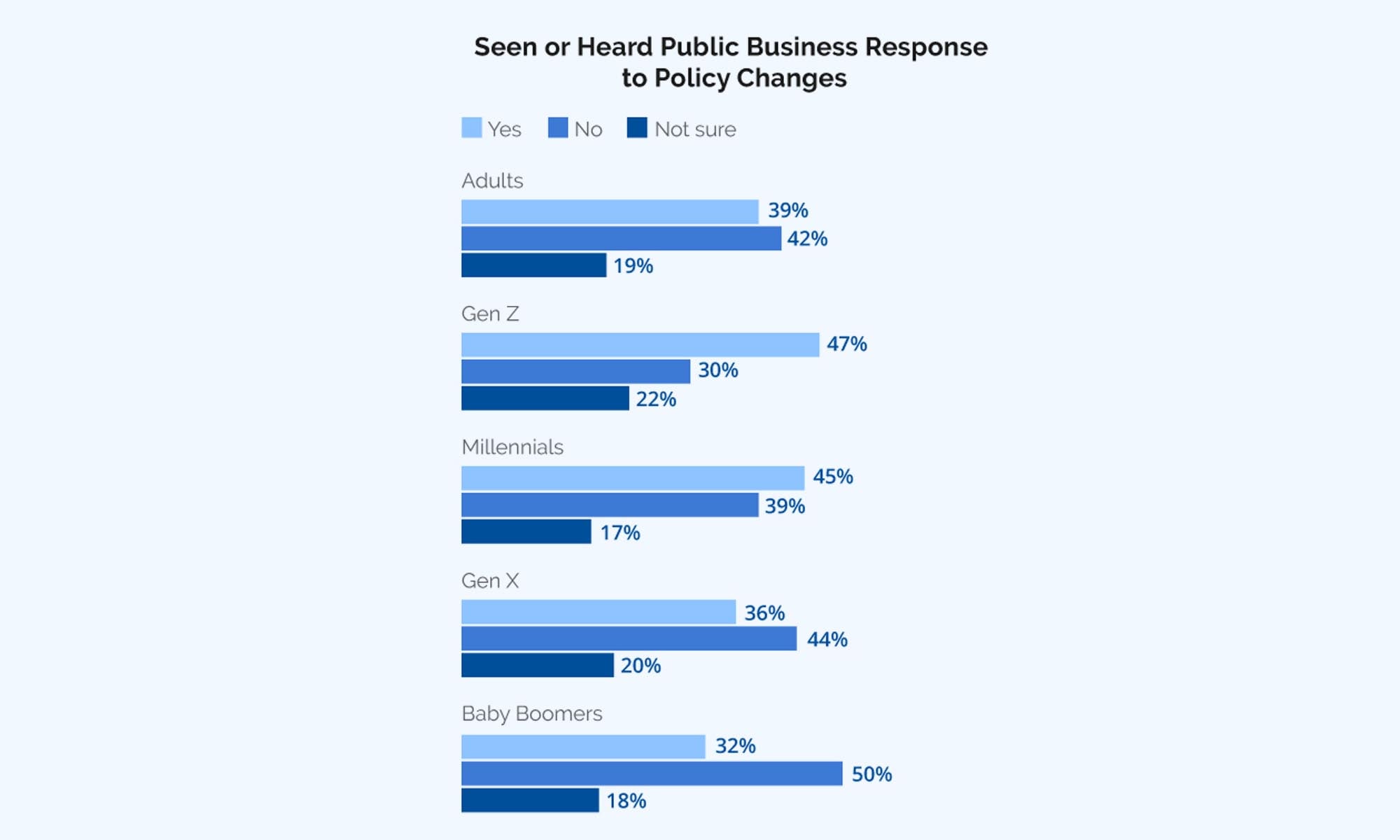
Only 39% of Americans say they are aware of how businesses have responded to recent federal policy shifts. Two in five say they have not seen or heard anything, while another 19% are unsure. That “visibility gap” underscores a practical reality for public affairs leaders: engagement that isn’t clearly communicated may not register at all. It’s notable that younger generations are more aware of business response – 47% of Gen Z compared to just 32% of Baby Boomers.
Skeptical—but Still Expectant
Public trust in corporate America remains constrained. Just 38% of adults say they trust businesses to act in the public’s interest during major policy changes, while 46% say they do not. Yet skepticism does not translate into a desire for disengagement. On the contrary, expectations for corporate participation in policy debates remain strong across parties and generations.
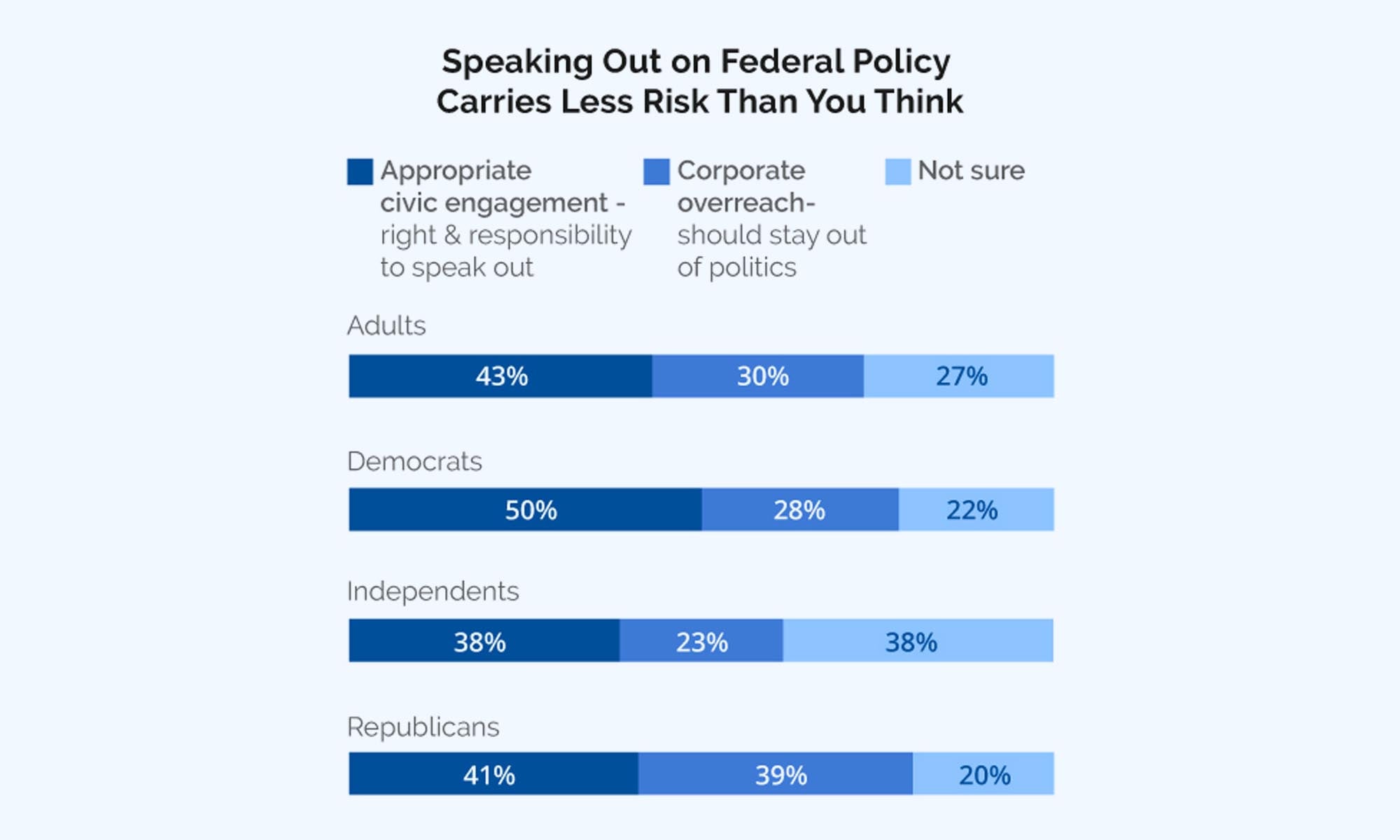
A plurality of Americans—43%—say it is appropriate for companies to speak out against federal policies they disagree with; only 30% view such engagement as corporate overreach. Nearly half (46%) say corporate engagement is good for democracy, compared to 27% who say it is harmful. Even among groups often cautious about corporate engagement, including Baby Boomers and Republicans, engagement is more often seen as beneficial than detrimental.
Although the message is nuanced at times, Americans still want businesses to contribute constructively to the policy conversation.
Room to Engage—Including in Disagreement
The survey also underscores that companies have latitude to speak up when policies conflict with their values or materially affect their stakeholders. Forty percent of adults say businesses have a responsibility to speak out against major policy shifts they oppose for ethical reasons. At the same time, only 16% believe companies should uniformly support the administration’s policies, even when they disagree.
Political differences do shape expectations—but not in binary ways. Democrats are broadly supportive of corporate advocacy. Republicans are more divided, with roughly equal shares supporting engagement (31%) and neutrality (34%). That division suggests that disagreement itself is not disqualifying. What matters most is whether engagement is rooted in a clear rationale and real‑world impact.
Rather than asking whether companies can engage—even in disagreement—the more productive question is how they do so.

Where Engagement Resonates Most
The survey highlights clear variation by issue area.
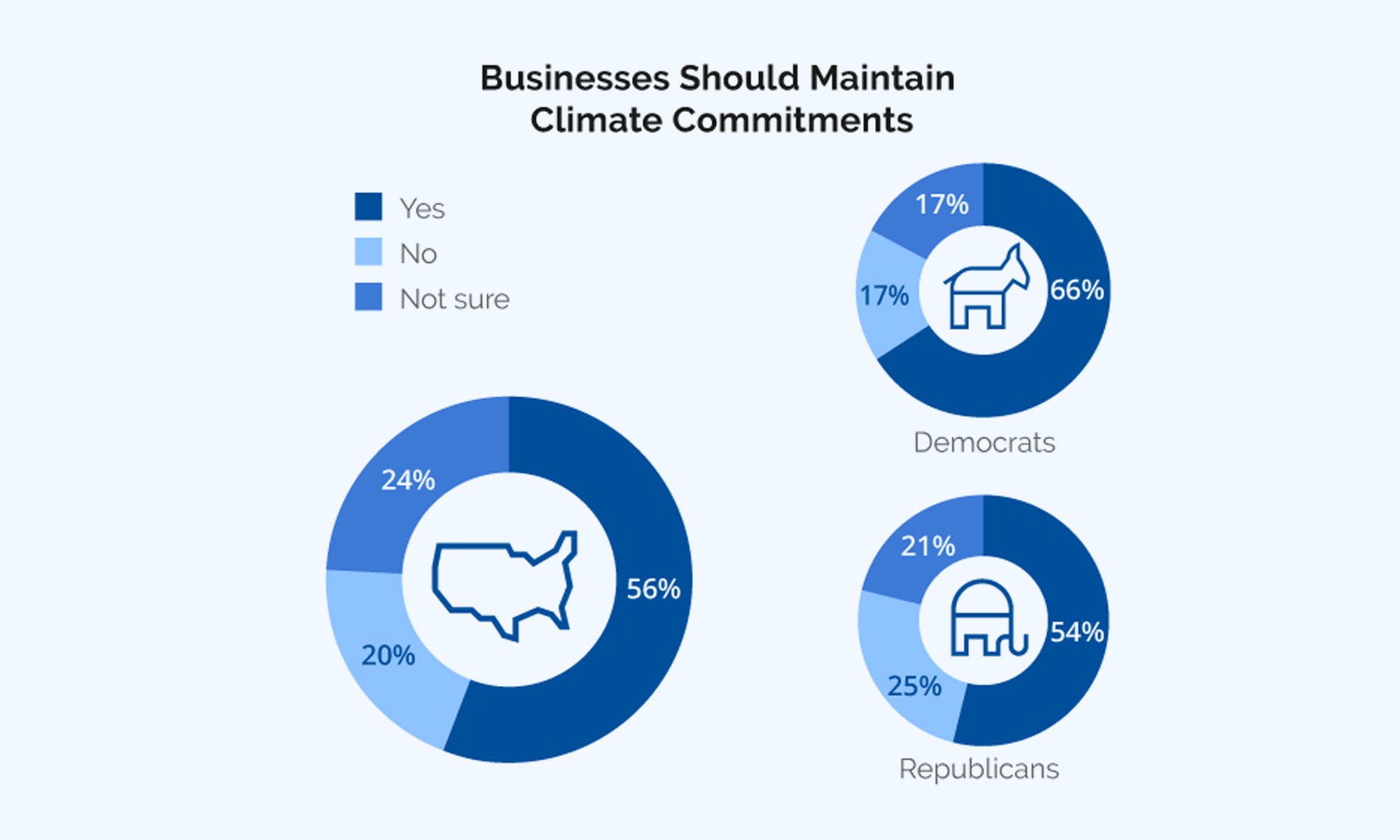
On climate, expectations are stable and bipartisan. A majority of Americans—56%—say businesses should maintain their prior climate commitments despite federal policy changes, including majorities of both Democrats (66%) and Republicans (54%). Here, the challenge is less about direction than communication: many Americans are unsure how businesses have responded, signaling an opportunity to clarify existing commitments.
On tariffs, trade and foreign policy, demand for corporate voice is even more pronounced. Many Americans list trade and tariffs among the top issues they want businesses to address, yet a third say companies should explain those impacts more clearly. Half of adults say recent U.S. foreign policy shifts are making global business conditions harder, with older Americans especially attuned to the economic consequences.
These issues present a clear opening for engagement: translating complex policy shifts into what they mean for jobs, prices and competitiveness.
Social and workplace policy and immigration carry more variability, but not outright opposition. In both areas, Americans tend to evaluate corporate engagement case by case. On immigration, business perspectives are more readily accepted when linked to workforce needs and economic outcomes, rather than partisan alignment.
The Through Line: Impact and Clarity
Across issues, one theme is consistent. Engagement grounded in company values and economic impact—and clearly communicated—earns broader support than silence or abstract positioning. When companies explain how policy affects their workers, customers and communities, they expand permission to engage, even on more contested terrain.
The 2026 Pulse Survey shows that Americans are not looking for businesses to weigh in everywhere. They expect companies to engage selectively, transparently and visibly on issues tied to their role in the economy and society.
Today’s policy environment is complex and requires thoughtful planning. Effective corporate engagement is less about taking sides and more about demonstrating relevance. Silence may feel safe—but clarity is what actually resonates.
Methodology
This poll was conducted between March 26–28, 2026, among a sample of 2,202 adults. The interviews were conducted online, and the data were weighted to approximate a target sample of adults based on gender, age, race, educational attainment, region, gender by age, and race by educational attainment. Results from the full survey have a margin of error of plus or minus 2 percentage points.
More News & Resources
A new transatlantic program bringing public affairs professionals in Washington, D.C., and Brussels together in real time.